Forgotten Grains, Found Again: The American Farmers Rescuing Heirloom Rice From Obscurity
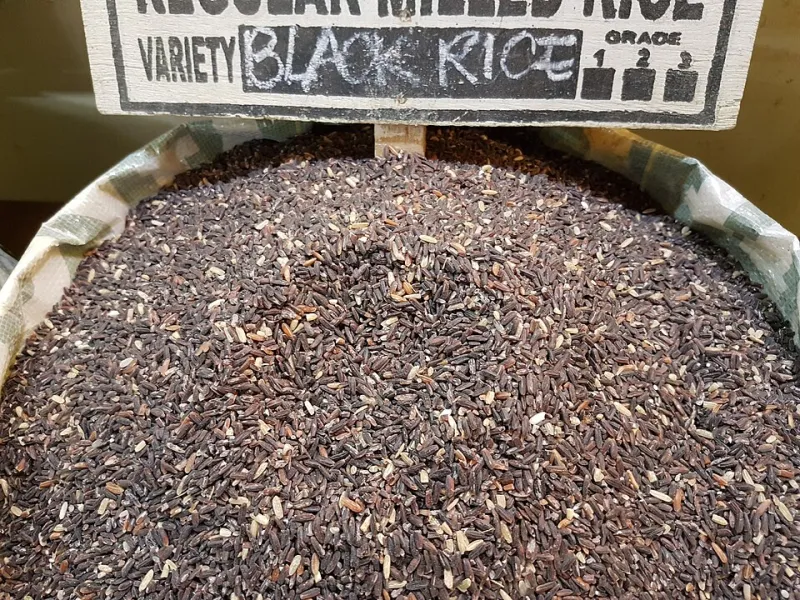
Photo: Obsidian Soul, CC0, via Wikimedia Commons
There's a jar of seeds sitting on a shelf in Dale Fontenot's Louisiana farmhouse that's older than most American highways. The label, faded and hand-lettered, reads Popcorn Rice — 1962. It's not a museum piece. Come spring, those seeds go in the ground.
"My daddy grew this. His daddy grew this," Fontenot says, turning the jar over in his calloused hands. "Somewhere along the way, everybody decided one kind of rice was enough. I never bought that."
Fontenot is part of a growing movement sweeping through American agricultural communities — farmers, seed keepers, and culinary advocates who are bringing back heirloom and indigenous rice varieties that commercial agriculture quietly shelved over the past half century. It's a story about more than just food. It's about memory, soil, and reclaiming something that almost slipped away for good.
How We Got Here: The Great Rice Narrowing
For most of the 20th century, American rice farming underwent dramatic consolidation. High-yield commodity varieties — bred for uniformity, easy milling, and long shelf life — gradually crowded out the diverse regional strains that once defined rice culture from the Carolinas to the Sacramento Valley. By the 1980s, a handful of long-grain and medium-grain varieties dominated commercial production, and hundreds of locally adapted cultivars simply vanished from fields.
The loss wasn't just cultural. Those forgotten varieties carried unique flavor profiles, distinct textures, and in many cases, nutritional compositions that modern commodity rice simply doesn't match. Some were drought-tolerant. Others thrived in specific soil types that no longer made economic sense to farm at scale. When the market stopped asking for them, farmers stopped growing them — and seeds quietly disappeared.
Seed banks like the USDA's National Center for Genetic Resources Preservation in Fort Collins, Colorado, quietly held onto some of these genetic treasures. Others survived in the hands of family farmers, Indigenous communities, and dedicated seed savers who refused to let go.
The Farmers Doing the Work
In Arkansas — a state that produces nearly half of all American rice — Glenn Roberts of Anson Mills has become something of a legend in heritage grain circles. His operation works closely with growers to revive Carolina Gold rice, a long-grain variety that sustained communities from South Carolina to the Mississippi Delta for centuries before nearly vanishing in the early 1900s.
"Carolina Gold isn't just a different rice," Roberts has said in interviews. "It cooks differently, it tastes different, it behaves differently in a pot. It's a whole other conversation."
That conversation is happening in more places now. In California's Sacramento Valley, small-scale farmers are experimenting with Koda Farms' heirloom Kokuho Rose and working alongside Japanese-American farming families to preserve short-grain varieties that arrived with immigrant communities generations ago. Meanwhile, in the upper Midwest, wild rice — technically a separate aquatic grain but deeply embedded in Indigenous foodways — is being reclaimed by Ojibwe and Anishinaabe communities who never stopped growing it, even as commercial wild rice operations tried to industrialize the crop.
For Marissa Tran, a second-generation Vietnamese-American farmer in the Texas Gulf Coast region, the revival is personal. She's been trialing several Southeast Asian heirloom varieties in the humid coastal prairie soils her family has farmed for decades.
"There's a jasmine-type rice my grandmother talked about that she said smelled like pandan leaves when it cooked," Tran explains. "I've been working with a seed library in Houston to try to find something close to it. When we got the first harvest, I called her and she cried."
What Makes Heirloom Rice Different — And Why Chefs Are Paying Attention
Ask any chef who's worked with heritage rice varieties and you'll hear the same thing: these grains don't behave like the rice you buy in a five-pound bag at the grocery store.
Heirloom varieties tend to have higher levels of amylose and amylopectin — the two starch components that determine how rice cooks and how it feels in your mouth. Some cook up fluffy and separate with a nutty depth that modern long-grain varieties can't touch. Others are stickier, creamier, or carry floral aromatics that transform a simple pot of rice into something genuinely memorable.
Nutritionally, many heirloom varieties retain more of their bran layer through traditional milling processes, which means higher fiber content, more B vitamins, and a lower glycemic impact compared to heavily processed white rice. Red and black heirloom varieties — like Bhutanese Red or Forbidden Black rice, both of which a handful of American farmers are now trialing — contain anthocyanins, the same antioxidant compounds found in blueberries.
Restaurants from New Orleans to Portland have started featuring heritage rice prominently on their menus, often naming the farm and variety directly on the menu — the kind of provenance storytelling that was once reserved for artisan cheeses or single-origin coffee.
"It's the same reason people started caring about heirloom tomatoes," says chef Anita Moreau, who runs a farm-to-table restaurant in Baton Rouge. "Once you taste the difference, you can't go back."
Challenges on the Road Back
Reviving a nearly extinct crop isn't romantic work. It's slow, expensive, and full of failure.
Heirloom varieties often yield significantly less per acre than modern commodity rice — sometimes 30 to 50 percent less. They can be more susceptible to disease, more sensitive to planting windows, and harder to mill with standard commercial equipment calibrated for uniform modern grain. Getting them certified organic adds another layer of complexity. And finding buyers willing to pay the premium prices that make small-batch heritage farming economically viable requires constant relationship-building with chefs, specialty retailers, and direct-to-consumer customers.
Seed availability remains a genuine bottleneck. Some varieties exist in quantities measured in ounces, not pounds, meaning farmers spend their first several seasons simply growing enough seed to plant a meaningful acreage — not selling a single grain.
"You're basically farming backwards for a few years," Fontenot admits. "You're building something before you can sell anything. Not everybody has the patience for that."
Where It Goes From Here
The momentum, though, is real. Organizations like the Organic Seed Alliance and regional seed libraries are actively documenting and distributing heirloom rice genetics. USDA programs supporting specialty crops have begun recognizing heritage grains as a category worth funding. And consumer demand for traceable, story-rich food continues to grow.
For home cooks, the most exciting development is accessibility. Heritage rice varieties that were virtually impossible to find five years ago are now appearing at farmers markets, specialty grocery stores, and online from direct-farm retailers. They cost more than commodity rice — sometimes significantly more — but the culinary payoff is hard to argue with.
A pot of properly cooked Popcorn Rice, with its faint floral aroma and slightly sticky bite, isn't just dinner. It's a direct line to a farming tradition that almost disappeared entirely.
Back in Louisiana, Fontenot is already thinking about next season's planting. The jar of seeds is back on the shelf, but not for long.
"People keep asking me why I bother," he says. "I tell them — somebody's got to remember."