From First Thaw to Final Harvest: A Prairie Rice Farmer's Year and What It Means for Your Dinner Table
Most of us interact with rice at exactly one moment in its life: the second it hits boiling water. But long before that pot comes to a simmer, a heritage rice kernel has already traveled through an entire year of weather, soil decisions, careful tending, and precise timing. And all of that — every frost date, every flooded field, every judgment call a farmer makes in July — ends up in your bowl.
If you've ever wondered why a bag of heritage rice from a small Midwest or Mid-South farm tastes so different from the commodity stuff on a grocery store endcap, the calendar is a big part of the answer. Let's walk through it.
Late Winter: The Planning That Happens Before Anyone Touches Soil
The rice year doesn't start in spring. It starts in February, sometimes earlier, when farmers are still staring at frozen ground and making decisions that will ripple through the entire growing season.
For heritage rice growers — the kind raising varieties like Presidio, Carolina Gold, or specialty black and red rices — seed selection is its own discipline. Unlike commodity operations that source standardized seed from large suppliers, heritage farmers are often stewarding seed stock they've saved themselves, traded with neighboring growers, or sourced from regional seed libraries. Choosing which variety to plant in which field requires knowing your microclimate intimately: how your soil drains, where you tend to get late cold snaps, which low-lying paddies hold water longest.
This is also when farmers map their fields, decide on rotation plans, and think through flooding schedules. Rice, unlike most grains, is typically grown in flooded paddies — and managing that water is an art form that starts with winter planning.
Spring: Mud Season Is Actually the Most Important Season
Once soil temperatures creep up past 60°F — usually sometime in April across the Mid-South and parts of the Midwest — it's go time. Fields get prepped, levees are checked and repaired, and water management infrastructure gets its annual once-over.
Heritage rice is typically seeded either by broadcasting (scattering seed directly onto flooded fields) or by drilling into prepared seedbeds before flooding. The method depends on the variety and the farmer's approach. Either way, the first weeks after planting are tense. Heritage varieties are often less uniform than modern hybrids, which means germination can be slower or spottier. Farmers are watching water levels constantly — too much early flooding can suffocate seedlings, too little leaves young plants vulnerable.
This is also when pests and competing vegetation start showing up. Heritage rice farmers who avoid synthetic inputs are managing all of this through water depth manipulation, timing, and sometimes good old-fashioned hand labor. It's not a passive process.
Early Summer: The Long, Quiet Middle
June and July can feel deceptively calm from the outside. The fields are flooded, the rice is growing, and if you drove past a heritage paddy in rural Arkansas or Missouri, you might not think much was happening. But this is when some of the most consequential development occurs.
Rice tillers — the side shoots that eventually produce grain-bearing stems — are forming and multiplying. Farmers are adjusting water levels to encourage tillering without promoting disease. They're scouting for blast fungus, which loves humid conditions and can devastate a heritage crop fast. They're also watching the sky obsessively, because a stretch of cloudy, cool weather during this period can compress the growing timeline and affect how fully the kernels develop.
Flavor complexity in heritage rice is built right here, in these long summer weeks. The slow accumulation of starches, proteins, and aromatic compounds in each kernel is influenced by temperature swings between day and night, water quality, and soil biology. A farm with rich, biologically active soil and clean water produces a grain that tastes like it came from somewhere — because it did.
Late Summer: Heading, and the Farmer's Most Anxious Weeks
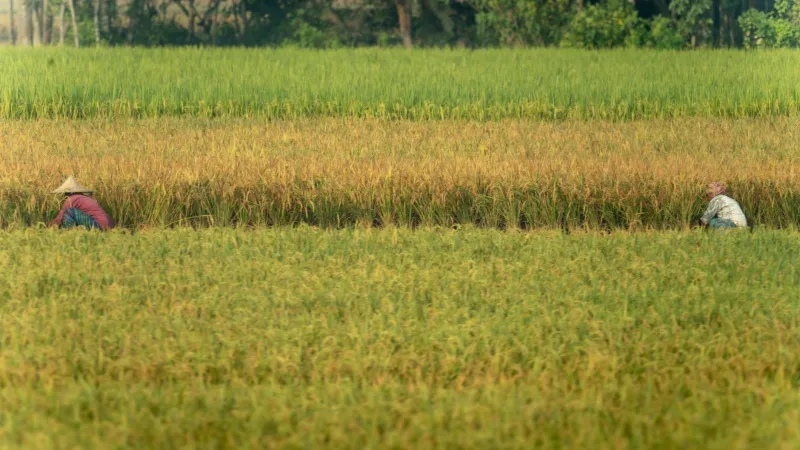
Sometime in August, depending on variety and location, heritage rice begins to "head out" — the grain-bearing panicles emerge from the plant and start to fill. This is visually one of the most beautiful moments in the rice calendar. Fields shift from solid green to a shimmering mix of green and gold as heavy, grain-laden stems begin to bow.
It's also when farmers get genuinely nervous. A bad storm can lodge plants (knock them over), making harvest difficult or impossible. Birds — particularly bobolinks and blackbirds — descend on ripening paddies and can take a significant portion of a crop if not managed. And the race against the first fall frost is always in the background.
For heritage varieties, the heading and grain-fill period is longer and less uniform than with modern cultivars. That's actually a feature, not a bug. The slower, more variable development contributes to the nuanced flavor profiles that make these rices worth seeking out. But it also means farmers can't just set a harvest date on a calendar — they're watching the grain daily, checking moisture levels, waiting for that window.
Fall Harvest: When Everything Comes Together (or Doesn't)
Harvest typically runs from mid-September through October across most U.S. heritage rice regions. Farmers are draining fields days or weeks before harvest to firm up the soil enough for equipment. Then comes the combine — or, on smaller heritage operations, sometimes a modified older machine that's gentler on the grain.
Moisture content at harvest matters enormously. Heritage rice cut too wet is prone to mold during storage. Cut too dry, the kernels become brittle and crack during milling, which reduces whole-grain yield and affects texture during cooking. Most heritage farmers are aiming for a moisture content somewhere around 18-22% at harvest, then carefully drying the grain down to storage levels.
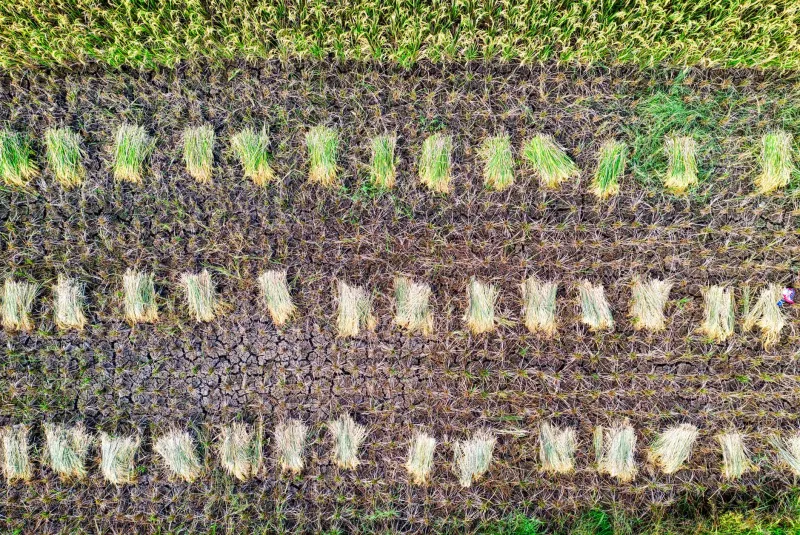
After harvest comes milling — removing the hull, and for brown rice, that's it. For white heritage rice, additional bran layers are removed, a process that has to be done gently to preserve the integrity of smaller, more fragile heritage kernels.
Why This Calendar Should Change How You Shop and Cook
Here's the part that matters for your kitchen: heritage rice is genuinely seasonal, even if it doesn't always look like it at the point of sale.
Freshly milled heritage rice — grain that's been harvested in October and milled within the last few months — cooks differently than rice that's been sitting in a warehouse for a year. It tends to be more aromatic, absorbs liquid more readily, and has a livelier flavor. Some cooks specifically seek out "new crop" rice in the fall and early winter for dishes where the grain is the star: simple rice bowls, congee, or a classic pilaf where nothing is hiding behind heavy sauces.
Older rice, sometimes called "aged rice" in certain culinary traditions, actually has its place too — it's firmer, less sticky, and holds up better in fried rice or grain salads. Understanding where a bag sits on that timeline helps you match the grain to the dish.
When you buy directly from a heritage rice farm or a regional grain company, you can often ask about harvest and milling dates. Most small producers are happy to tell you — they're proud of that information. It's the kind of transparency that commodity rice simply can't offer.
The prairie calendar doesn't stop at the field's edge. It follows the grain all the way to your pantry, and if you pay attention to it, your cooking will be better for it.