Ditch the All-Purpose: Midwest Chefs Are Baking With Grains Your Great-Grandparents Actually Knew
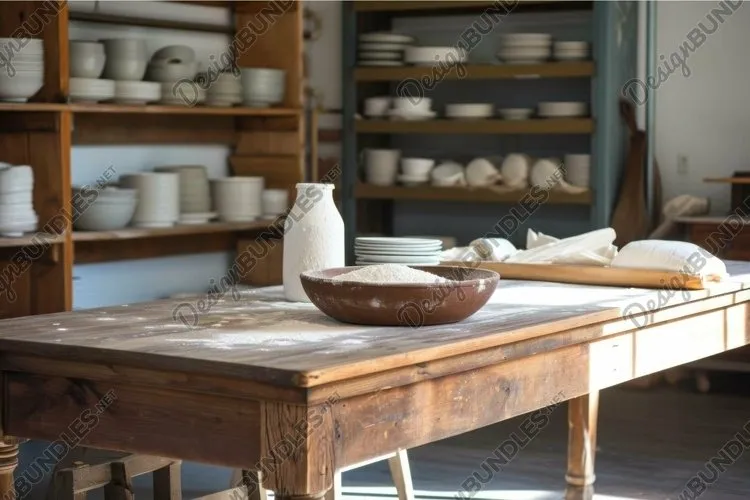
Photo: stone-ground heritage grain flour rustic wooden table Midwest bakery, via i.fbcd.co
There's a bag of spelt flour sitting on the prep counter at a small restaurant in Kansas City, right next to a mason jar of stone-ground einkorn and a cloth sack of heritage blue corn. The head chef there, Marcus Webb, picks up the spelt and gives it a little shake like he's showing off a trophy. "People think ancient grains are some coastal trend," he says, laughing. "But this stuff literally grew on the prairie. We're just bringing it home."
That sentiment is catching on fast across the Midwest. From Minneapolis supper clubs to Omaha brunch spots, chefs are quietly — and sometimes not so quietly — swapping conventional wheat flour for grain varieties that predate modern agriculture by thousands of years. Spelt, einkorn, emmer, and heritage corn are showing up in everything from sourdough loaves to pie crusts to cornbread that tastes like it actually means something.
So what's driving the swap? And more importantly, how do you pull it off at home without turning your Saturday morning pancakes into a science experiment?
Why These Grains Fell Off the Map in the First Place
To understand why chefs are excited about ancient grains, it helps to know why they disappeared. Over the course of the twentieth century, American agriculture got very good at producing very consistent wheat. High-yield varieties bred for uniformity replaced older, more variable strains. The result was flour that behaved predictably — great for industrial baking, reliable for home cooks, but stripped of a lot of the character that made older grains interesting.
Einkorn, for example, is one of the oldest cultivated wheats in the world. It has a higher protein content than modern wheat, but the gluten it forms behaves differently — it's more extensible and less elastic, which means your baked goods come out tender and almost creamy in texture rather than springy and chewy. Spelt has a slightly higher fiber content and a mild, slightly sweet nuttiness that plays beautifully in quick breads and muffins. Heritage corn — we're talking about open-pollinated varieties like Bloody Butcher or Hopi Blue, not the commodity corn that covers most of the Midwest — brings deep, complex flavor that standard cornmeal just can't touch.
"Modern flour is like a blank canvas," says chef Dara Linfield, who runs a farm-to-table café outside Des Moines. "Which is useful. But these older grains are already a painting. You're starting from somewhere interesting."
What the Science Actually Says
Nutrition researchers have been poking at ancient grains for years now, and the findings are pretty compelling. Einkorn tends to have higher levels of certain antioxidants, including lutein, compared to modern wheat. Spelt contains a different ratio of gluten-forming proteins, which some people with mild wheat sensitivities find easier to digest — though it's important to note that spelt is absolutely not safe for people with celiac disease.
Heritage corn, when it's stone-ground and whole, retains the germ and bran that industrial processing strips away, meaning you're getting more fiber, more minerals, and more of the fat-soluble vitamins that make whole grains worth eating in the first place.
But honestly? Most of the chefs we talked to aren't leading with nutrition. They're leading with flavor. "If it didn't taste better, I wouldn't bother," Marcus says plainly. "But it does. So here we are."
The Practical Stuff: How These Flours Actually Bake
Here's where home cooks tend to get tripped up. Ancient grain flours don't behave exactly like all-purpose, and if you just do a straight one-to-one swap in your favorite chocolate chip cookie recipe, you might end up with something that's a little flat, a little dense, or a little crumbly. That's not a failure — it's just physics.
Dara recommends starting with a partial substitution. "Replace about thirty percent of your all-purpose with spelt or einkorn first," she says. "Get a feel for how it changes the texture and flavor. Then push it further if you want."
A few practical notes from the chefs:
Spelt absorbs liquid more slowly than all-purpose flour. Let your batter or dough rest for ten to fifteen minutes after mixing before you make any decisions about adding more liquid. It almost always hydrates fully if you give it a little time.
Einkorn produces a stickier dough than you might expect. Don't panic and add more flour — just use lightly oiled hands or a bench scraper. It bakes up beautifully if you trust the process.
Heritage cornmeal is coarser and more flavorful than standard cornmeal, but it can make cornbread crumbly if you're not careful. Adding an extra egg or a tablespoon of sour cream helps bind things together and adds a nice richness.
Where to Actually Find These Grains
This is the question we get every time ancient grains come up, and the answer is genuinely better than it was five years ago. Farmers markets across the Midwest are increasingly carrying stone-milled heritage flours directly from regional growers. States like Kansas, Nebraska, and the Dakotas have a growing number of small mills bringing these varieties back into production.
Online, brands like Barton Springs Mill, Sunrise Flour Mill out of Minnesota, and Anson Mills (which focuses heavily on heritage corn) ship directly to home cooks. Many natural food co-ops now stock at least one or two ancient grain flours as well.
"I always tell people to buy from as close to the source as possible," says Marcus. "A flour milled in Kansas from Kansas-grown grain is going to taste different — better, I'd argue — than something that's been sitting in a warehouse for six months."
A Starting Point: Heritage Grain Pancakes
If you want a low-stakes entry point into ancient grain baking, pancakes are your friend. The forgiving, wet batter means small variations in flour behavior don't matter much, and the short cook time means you get quick feedback.
Try swapping half your all-purpose flour for whole spelt flour. Add a little extra buttermilk if the batter seems thick, and let it rest for five minutes before you ladle it onto the griddle. What you'll get is a pancake with more depth — slightly nutty, a little earthy, with a tenderness that standard pancakes just don't have.
From there, the world opens up. Heritage cornbread. Einkorn sandwich loaves. Spelt pie crust that practically shatters. Once you start baking with grains that have actual history behind them, going back to the anonymous white bag feels like a step backward.
The prairie grew these grains long before commodity agriculture decided they weren't worth the trouble. It turns out the chefs — and the home cooks paying attention — are figuring out that was a mistake worth correcting.