Home Turf Advantage: How American Heritage Rice Holds Its Own Against the World's Best
Ask most home cooks which rice they reach for when they want something special, and you'll hear the same names over and over: arborio for risotto, basmati for biryani, jasmine for a fragrant Thai curry. These are the celebrated imports, the rice varieties that built their reputations over centuries and traveled the world on the strength of them.
But here's the thing — American farmers have been growing heritage rice varieties for generations, and a growing number of chefs, food scientists, and everyday cooks are starting to pay attention. Not in a flag-waving, buy-American-just-because way. In a this-stuff-is-genuinely-good, let's-talk-about-it way.
So we did. We talked to farmers, pulled in chef perspectives, dug into nutritional data, and organized informal taste tests to answer one honest question: when does American heritage rice actually outperform its global competition, and when does it fall short?
Setting the Stage: What We're Comparing
For the purposes of this piece, we're looking at three of the most respected international rice varieties available in American markets:
- Italian arborio — short-grain, high-starch, the risotto standard
- Indian basmati — long-grain, aromatic, prized for its nutty fragrance and dry, separated texture
- Thai jasmine — medium-long grain, floral aroma, slightly sticky when cooked
And on the American side, a representative sample of heritage varieties currently grown domestically:
- Carolina Gold — a long-grain heirloom revived in South Carolina and now grown across the Southeast and Gulf Coast
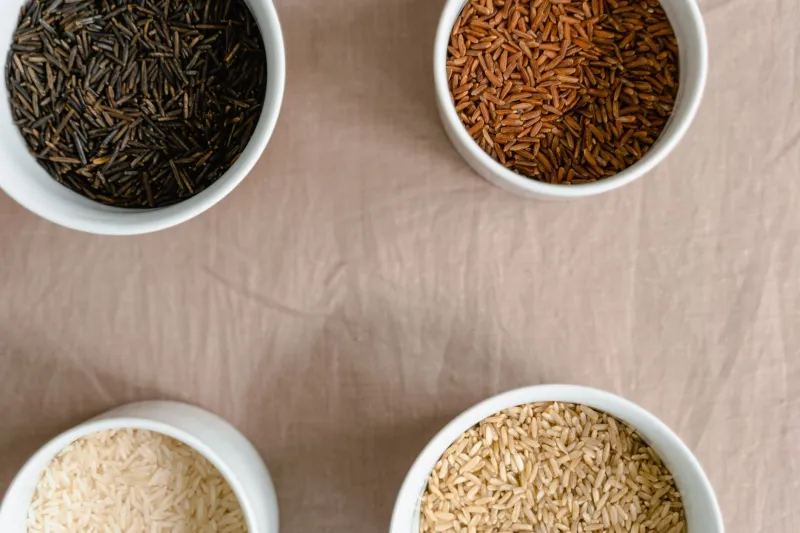
- Heirloom red rice — grown in Arkansas and Louisiana river bottoms, earthy and nutty
- Black japonica — a specialty variety cultivated in California's Sacramento Valley
- Delta-grown medium-grain — a heritage variety with a creamy texture that rivals European short-grain rice
The Blind Taste Test
At a small supper club event in Chicago organized through a local food co-op, twelve participants — including three professional cooks, a registered dietitian, and eight home cooks — tasted eight rice samples cooked identically: rinsed, simmered in water at a 1:1.75 ratio, rested and fluffed. No salt, no seasoning, no context about origin.
The results were more interesting than anyone expected.
Carolina Gold drew comparisons to basmati from four of the twelve tasters — specifically for its light floral quality and the way the grains stayed separate. "I honestly would have guessed this was an import," said one participant, a line cook who works primarily with Asian cuisines. "There's a delicacy to it I wasn't expecting from something domestic."
The Arkansas red rice divided the room. Half the tasters found its earthy, almost mushroom-like depth too assertive on its own. The other half called it the most interesting rice on the table. "It tastes like it came from somewhere," one home cook said. "Most rice doesn't taste like anything. This one does."
The delta medium-grain surprised the professional cooks most. Cooked to a creamy consistency, it held its own against arborio in a side-by-side risotto-style preparation. "The starch release is different — a little less aggressive than arborio, but the mouthfeel is genuinely comparable," noted one chef. "And the flavor underneath is more complex."
The Nutrition Question
This is where American heritage varieties tend to pull ahead consistently. Most heritage rices are minimally processed, meaning the bran layer stays intact. That bran contains fiber, B vitamins, magnesium, and antioxidants that commercial milling strips away.
Compared to polished white arborio or standard jasmine rice:
- Heritage brown and red rices typically contain three to four times more fiber
- Significantly higher levels of manganese and phosphorus
- Anthocyanins (the pigments in black and red varieties) that function as antioxidants in the body
Polished basmati and jasmine can be found in brown versions too, and those are nutritionally comparable to heritage American brown rices. But the heritage varieties — because they're grown in smaller batches with less industrial processing — tend to retain more of their nutritional profile simply because they spend less time in machinery.
Katie Larsen, a registered dietitian based in Minneapolis, has been recommending heritage grains to clients for several years. "The nutritional case for these grains is solid," she says. "But honestly, I find people stick with them because they taste better, not because of the fiber content. The nutrition is a bonus."
The Sustainability Argument
This is where the conversation gets genuinely complicated, and where American farmers have the strongest case to make.
Shipping rice from India, Thailand, or Italy to American tables carries a significant carbon footprint. By contrast, heritage rice grown in Arkansas, Louisiana, California, or the Carolinas travels a fraction of the distance to reach most American consumers. Smaller farms growing heritage varieties also tend to use more sustainable practices — lower synthetic input loads, traditional water management techniques, and crop rotation systems that protect soil health over time.
Luke Patterson, who farms heritage rice on about 200 acres in southeastern Missouri, is direct about the comparison. "I'm not going to tell you my rice is better than everything grown overseas. That's not honest. But I will tell you that when you buy from a farm like mine, you know where the water came from, how the soil was managed, and that the people who grew it were paid fairly. That matters to a lot of folks."
The sustainability edge for domestic heritage rice is real, though it comes with a caveat: not every American rice operation is small and sustainable. Large-scale commodity rice farming in the Arkansas Delta, for instance, uses significant amounts of water and agricultural chemicals. The heritage and heirloom distinction matters here — it's not simply about geography, it's about farming philosophy.
When Global Varieties Still Win
Honesty requires acknowledging the limits. For traditional risotto, Italian arborio remains the gold standard — its specific starch composition creates a creaminess that domestic medium-grain varieties approximate but don't quite replicate. For long-cooked biryani where fragrance is the point, aged Indian basmati has a complexity that Carolina Gold, for all its charms, approaches but doesn't match.
And for the sheer everyday affordability of a fragrant bowl of jasmine rice alongside a weeknight stir-fry, Thai jasmine at $1.50 a pound is hard to argue against on pure convenience.
The Honest Bottom Line
American heritage rice doesn't win every category. But it wins more than most people expect — and in some categories, particularly nutrition, sustainability, and the kind of layered, place-specific flavor that food writers love to talk about, it competes at the highest level.
The strongest argument for going local isn't that it's better than everything else. It's that it's good enough to be your first choice — and that choosing it supports American farms, American soil, and American food traditions worth keeping alive.
That's a pretty compelling case, even if you hold the flag-waving.