Same Seed, Different Story: How Soil, Water, and Sky Shape the Flavor of American Heritage Rice
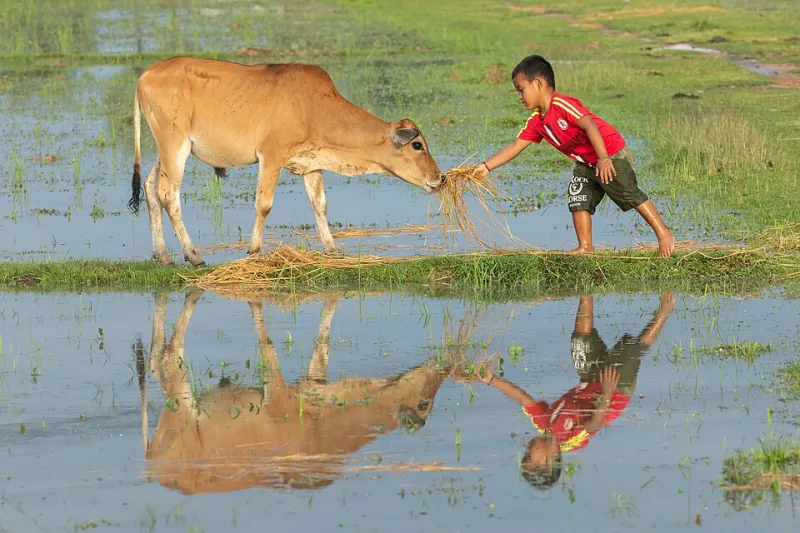
Photo: Lokalpedia, CC BY-SA 4.0, via Wikimedia Commons
Pour a glass of good wine and most people accept that where it grew matters as much as the grape itself. The French have a word for it — terroir — and for decades it's been the storytelling backbone of vineyards from Napa to Burgundy. But spend a few hours talking to heritage rice farmers across the American prairie, and you start to realize that word belongs in their vocabulary just as much as any winemaker's.
Same seed. Different field. Completely different bowl of rice. That's the short version. The longer version involves soil chemistry, aquifer depth, summer wind patterns, and the kind of temperature swings that would make a coastal farmer nervous — and it's a story that's been quietly unfolding across the heartland for generations.
What Terroir Actually Means When We're Talking About Rice
The term gets borrowed a lot, sometimes loosely. But at its core, terroir is simply the idea that a plant's environment leaves a fingerprint on the food it produces. Geology, hydrology, climate, even the microbial life in the soil — all of it influences flavor, texture, and nutritional density in ways that no two growing regions can fully replicate.
"People think of rice as a blank canvas," says Dr. Mara Ellison, a soil scientist at a Midwest agricultural research cooperative who has spent the better part of a decade studying mineral uptake in heritage grain varieties. "But it's actually one of the most expressive crops out there. It absorbs its environment. The question is whether the person eating it has been taught to pay attention."
For heritage varieties — the older, open-pollinated strains that haven't been bred primarily for yield or uniformity — that expressiveness is even more pronounced. Without the genetic smoothing-out that commercial breeding often introduces, these grains stay closer to their roots, both literally and figuratively.
The Water Underneath Everything
In many prairie rice-growing regions, irrigation doesn't come from surface reservoirs alone. It comes from deep aquifers — ancient underground water sources that carry mineral signatures built up over thousands of years. The difference between water drawn from a limestone-heavy formation versus a sandstone aquifer isn't just a chemistry lesson. It shows up in the finished grain.
Calcium and magnesium levels in irrigation water influence how starch granules develop inside the rice kernel. Higher mineral content tends to produce a firmer, more distinct texture after cooking — the kind of bite that holds up in a grain salad or a long-simmered pilaf. Softer water, lower in dissolved minerals, often yields a creamier, more cohesive result that works beautifully in a rice pudding or a slow-cooked porridge.
"We started noticing years ago that the same variety cooked differently depending on which field it came from," says James Cotter, who grows heirloom medium-grain rice on a family operation in the Missouri River lowlands. "We thought we were doing something wrong. Turns out we were doing something right — we just didn't have the language for it yet."
Cotter now tests his irrigation water seasonally and tracks how mineral fluctuations correlate with that year's harvest. It's the kind of record-keeping that feels more like a winemaker's cellar notes than a commodity grain operation.
When the Temperature Drops at Night
One of the more surprising terroir factors in prairie rice farming is thermal variation — the gap between daytime highs and overnight lows during the grain-filling stage of growth. In coastal or tropical growing regions, temperatures stay relatively stable around the clock. On the prairie, summer nights can drop 25 to 30 degrees Fahrenheit from the afternoon peak.
That swing matters. When temperatures fall at night, the rice plant slows its metabolism, which means the sugars and starches it's been producing during the day don't get burned off as quickly. They accumulate in the developing grain. The result, according to several agronomists studying heritage varieties, is a noticeably sweeter, more complex flavor compared to rice grown in consistently warm climates.
"It's the same principle that makes high-altitude apples taste better," Dr. Ellison explains. "Stress — the right kind of stress — concentrates flavor. Prairie nights do that for rice."
This is partly why some heritage rice farmers in the upper Midwest have started leaning into their climate rather than fighting it. A shorter growing season with sharp thermal contrast can actually be an asset, not a liability, when you're growing for flavor rather than volume.
Reading the Soil Like a Field Guide
Prairie soils are famously deep and dark — the legacy of thousands of years of grassland decomposition. That organic matter richness feeds microbial communities that influence nutrient availability in ways that synthetic fertilizers simply can't replicate. But even within the prairie belt, soil profiles vary significantly from county to county, sometimes from field to field.
Heavy clay content slows drainage and keeps moisture around the roots longer, which affects how the plant manages stress during dry spells. Sandy loam drains quickly and warms up faster in spring, giving an earlier start but less moisture buffer in August. The iron content of certain prairie soils in the upper Midwest contributes trace minerals that some tasters describe as a subtle earthiness in the finished grain — not unpleasant, more like the way a good whole-grain bread carries a depth that white flour can't match.
"You can taste the difference between our north field and our south field if you know what you're looking for," says Renata Vasquez, who farms a mixed heritage grain operation in the Nebraska Sandhills. "The north field sits lower, gets more moisture, and the rice from it is softer, almost buttery. The south field is drier, the grains are firmer, and they have this nutty quality that I love in fried rice."
Vasquez has started labeling her harvest by field block rather than just variety, a practice more common in small-production wine and olive oil than in American grain farming. Her customers, she says, have noticed.
Why This Matters at Your Table
None of this is just farmer trivia. Understanding that heritage rice carries its geography means you can start matching varieties to cooking methods with a lot more intention. A mineral-forward, firm-textured rice from an aquifer-irrigated prairie field is going to behave differently in your pot than a sweet, thermally stressed grain from a high-altitude Midwest valley — and both are going to outperform most of what's sitting on a supermarket shelf in terms of sheer flavor complexity.
It also means that buying directly from regional heritage producers isn't just an ethical choice. It's a culinary one. When a farmer can tell you which field a batch came from, what the water source was, and how the summer played out temperature-wise, you're getting information that actually changes how you cook.
That's the terroir story that prairie rice has been waiting to tell. The land has always been writing it. We're just finally starting to read it.